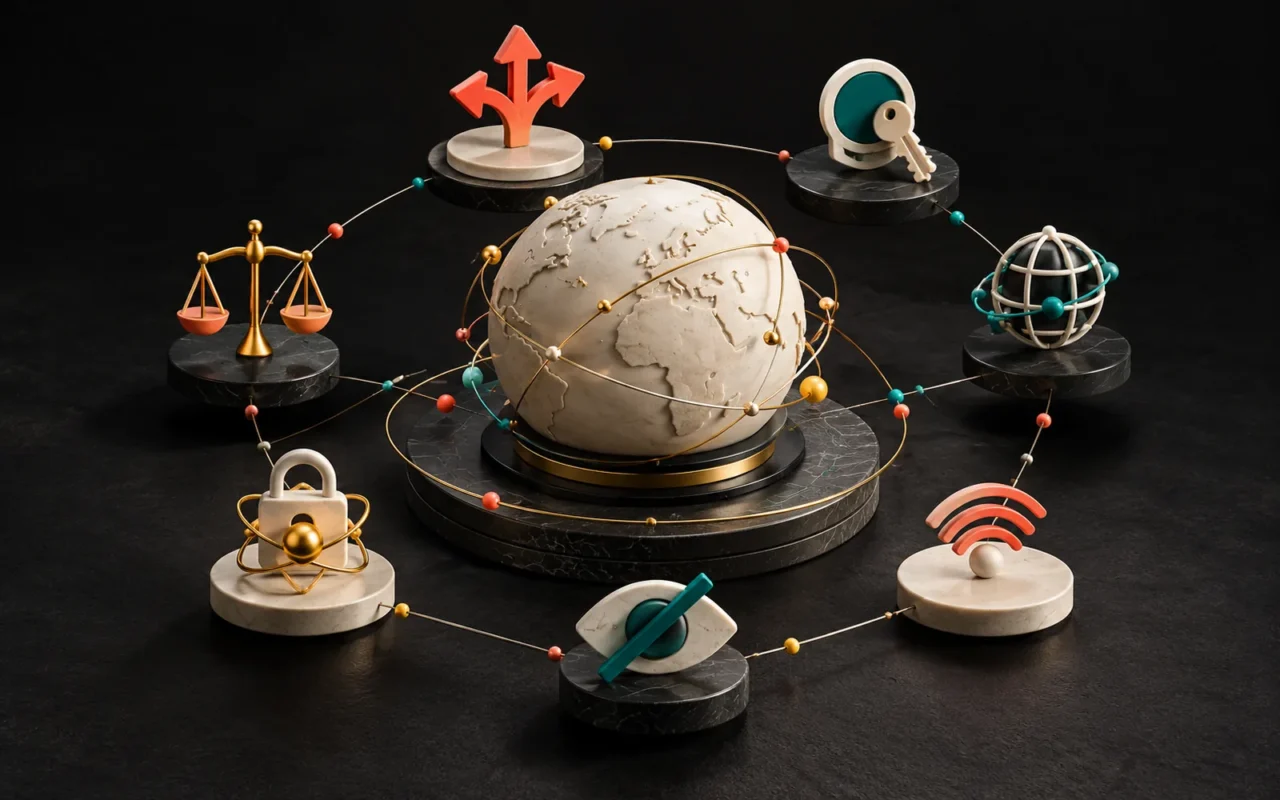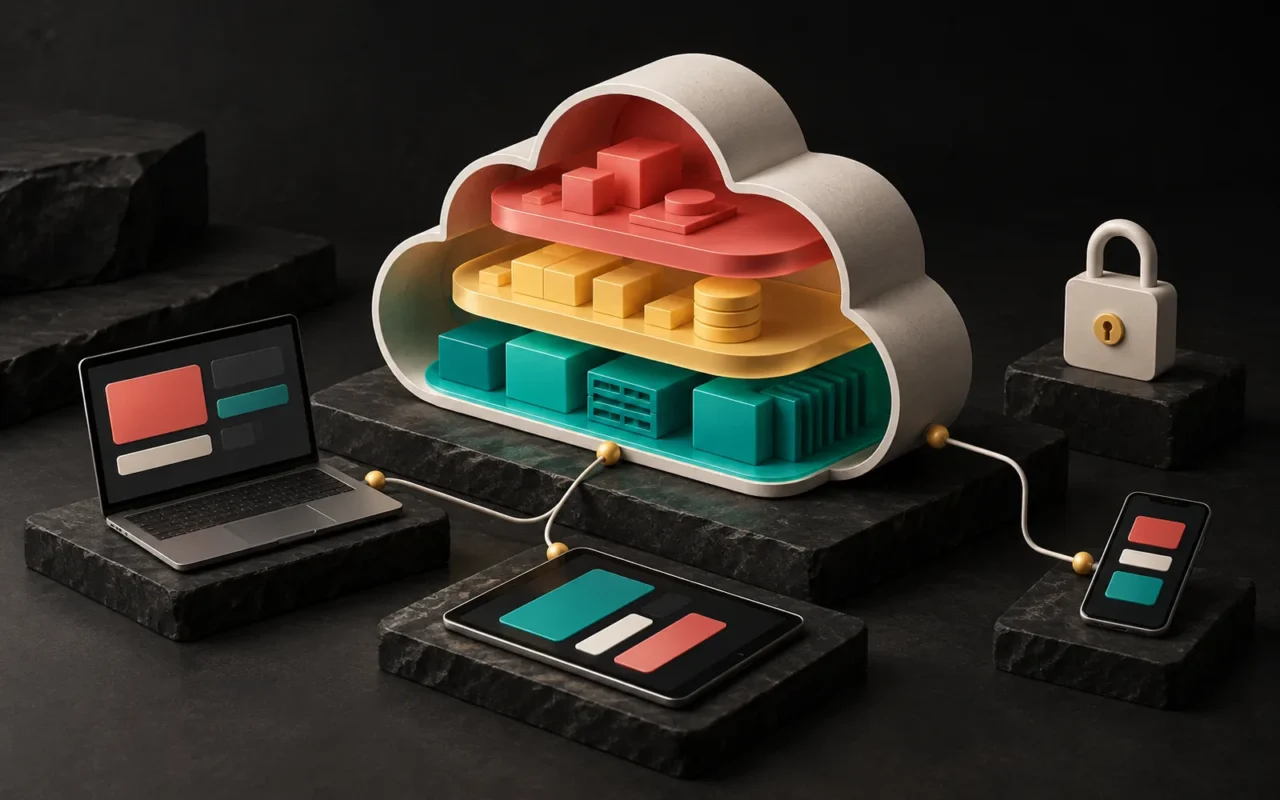
Web 3.0 is a vision put forward for the next stage of the internet. Today it is mostly used to mean a blockchain-based web in which users directly own their data and digital assets. But the term doesn't describe a single idea, and there is a clear gap between what is promised and what actually works today.
In short
- "Web 3.0" is used for two separate ideas: Tim Berners-Lee's semantic web vision and blockchain-based "Web3."
- The term Web3 was coined in 2014 by Gavin Wood, one of Ethereum's co-founders; the core idea is to add "owning" to a web that is "read and written."
- The basic building blocks: blockchain, smart contracts and wallets that stand in for identity.
- User experience, transaction costs, security and regulatory uncertainty are still major obstacles.
- In Turkey, paying with crypto assets has been banned since 2021; crypto asset service providers have required a license from the Capital Markets Board (SPK) since 2024.
What is Web 3.0? Let's pin down the term first
We can roughly summarize the eras of the web like this:
- Web 1.0 (roughly the 1990s to the early 2000s): Mostly static pages. Users read, with little interaction.
- Web 2.0 (from the mid-2000s on): Social media and user-generated content. Users both read and write, but the platforms are largely in the hands of a few companies.
- Web 3.0: This is where the paths diverge.
The first meaning: the semantic web. Tim Berners-Lee, the inventor of the web, has long advocated a web of linked data that machines can understand too. Today he supports the Solid project, in which personal data is kept in stores called "pods" under the user's control. In a 2022 interview, when asked whether he was on the same page as blockchain-based Web3, he answered simply "no," saying blockchain is too slow, too expensive and too public for personal data.
The second meaning: blockchain-based Web3. According to Ethereum.org, the term was coined in 2014 by Gavin Wood, one of Ethereum's co-founders. The idea is to add an "owned" dimension to the web being "readable and writable": users should own their digital assets and identities without depending on a company's server.
Today, when people say "Web 3.0," they mostly mean this second sense. That's the main focus of this post too.
How does it work? Three basic building blocks

Blockchain
A blockchain is a structure in which records are kept not in a single company's database but in a shared ledger copied across many computers on the network. New records are added in blocks and are very hard to change retroactively. You can think of it as a ledger that everyone holds a copy of and to which pages can only be added at the end.
Smart contracts
A smart contract is a program stored on a blockchain that runs automatically on "if this happens, do that" logic. Ethereum.org compares it to a vending machine: if you pick the right product and insert enough money, the product comes out; otherwise, nothing happens. An important detail: once a smart contract is deployed, its code can't be changed. This builds trust, but it also makes it hard to fix a bug in the code later.
Wallets
In Web3, a wallet isn't just a place to hold cryptocurrency; it's also an identity tool. Instead of a username and password, you connect to an app with your wallet. The flip side is a heavy responsibility: if you lose your wallet's private keys, in most cases there's no recovery option like "forgot my password."
Between hype and reality
Huge expectations have built up around Web3 in recent years. A balanced view means looking at both sides.
| Promise | Today's reality |
|---|---|
| An internet without intermediaries, decentralized | Even Ethereum.org admits the ecosystem still depends heavily on centralized services such as GitHub and Discord. |
| Accessible to everyone | Transaction fees are still high for many users; user interfaces are complex. |
| Systems that don't require trust | Users may approve transactions without fully understanding what they do (the "blind signing" problem). The risk of faulty smart contracts and fraud persists. |
| The energy waste criticism | With "the Merge" in September 2022, Ethereum switched to proof of stake and announced that it had cut its energy consumption by about 99.95%. This criticism no longer applies equally to all networks. |
So the technology isn't an entirely empty promise, but claims like "every business will soon have to move to Web3" have no concrete basis today. Your website, your e-commerce platform and your business software will continue to run largely on today's web technologies for the foreseeable future.
The regulatory framework in Turkey and Europe
Because Web3 projects are often intertwined with crypto assets, it's important to know the legal framework:
- Ban on crypto assets in payments: Under a regulation of the Central Bank of the Republic of Turkey (TCMB) published in the Official Gazette (Resmî Gazete) on 16 April 2021, the direct or indirect use of crypto assets in payments has been banned since 30 April 2021. This means collecting payment for products or services on your site in crypto assets conflicts with this regulation.
- Capital Markets Board license: Law No. 7518, which entered into force on 2 July 2024, added crypto asset definitions to the Capital Markets Law. Setting up and operating a crypto asset service provider now requires a license from the Capital Markets Board (SPK).
- European Union: The EU's Markets in Crypto-Assets Regulation (MiCA) has applied in full since December 2024. Projects serving users in the EU have to take this framework into account as well.
The rules in this area change quickly. If you're considering a business model involving crypto assets, be sure to start by working with a legal advisor.
What does it mean for your website and business?
As a business owner, these are the practical lessons you can take from the Web3 debate:
- The idea of data ownership is valuable. Web3's starting point was for users to have more control over their data and identity. You can apply this principle without a blockchain: your own domain name, your own website, exportable data and a customer database that belongs to you. For example, you should ask the same question when choosing an e-commerce platform: who really controls your data and your store?
- Technology comes after the need. Projects that start with "let's have a blockchain" often complicate a problem that an ordinary database could solve more cheaply and quickly. Situations where several parties don't trust each other and need a shared, unchangeable record are where blockchain really makes sense.
- Think about your customer's experience. A flow that requires setting up a wallet, storing keys and understanding transaction fees is a serious obstacle for an ordinary customer.
Common mistakes
- Assuming Web 3.0 and Web3 are the same thing. One is the semantic web; the other is a blockchain-based vision.
- Choosing blockchain because it's trendy. Technology chosen before the problem is defined brings cost and maintenance overhead.
- Underestimating immutability. A faulty smart contract can't be updated as easily as conventional software.
- Skipping the legal framework. In Turkey, using crypto assets in payments is banned, and acting as a service provider requires a license.
- Not thinking about key management. A lost key often means a permanently lost asset.
Our experience
In our web and software projects, we always start technology choices from the need: first we define the problem, the user and the maintenance, then we look for the simplest, most sustainable solution for it.
For example, in our own product AquaCRM, each subscribing company's data is kept in its own isolated space. As in this example, needs such as data separation and access control can often be met with a well-designed conventional database architecture.
Frequently asked questions
Are Web 3.0 and Web3 the same thing?
In everyday use, they're often used interchangeably, but their origins differ. "Web 3.0" was previously also used for Tim Berners-Lee's semantic web vision. "Web3," on the other hand, describes the idea of a blockchain-based internet that Gavin Wood put forward in 2014.
Do I need to own cryptocurrency for Web3?
In practice, usually yes, since transaction fees in most blockchain-based applications are paid in crypto assets. This is one of the obstacles to Web3's wider adoption.
Can I accept crypto asset payments on my site?
In Turkey, under the Central Bank's 2021 regulation, crypto assets can't be used directly or indirectly in payments. For this reason, we don't recommend this method; you should consult a lawyer for a detailed assessment.
Is Web3 worth learning?
To understand the technology, yes. But before making an investment decision for your business, you need a realistic assessment in terms of a concrete need, legal compliance and user experience.
Conclusion
Web 3.0 is a vision that raises important questions about the future of the internet but hasn't yet delivered most of its promises. Blockchain is a meaningful tool for certain problems, not for every problem. The soundest path for your business is to take the good ideas, such as data ownership and transparency, and to choose technology according to need.
If you'd like to assess the right technology for your project together, take a look at our software and digital solutions and web design pages. If you're curious about the infrastructure side, our posts on what cloud computing is and what custom software is are a good place to start.
Learn more on Grafik Sanat (in Turkish): Visual explanations and quizzes on this topic → grafiksanat.com.tr/terim/web-3
This article is for general information only and is not legal advice.
Sources7
- ethereum.org, "What is Web3 and why is it important?", ethereum.org
- ethereum.org, "Introduction to smart contracts", ethereum.org
- ethereum.org, "The Merge", ethereum.org
- TNW, "Web inventor Tim Berners-Lee: Screw Web3 — my decentralized internet doesn't need blockchain" (23 June 2022), thenextweb.com
- SPK, "Kripto Varlık Hizmet Sağlayıcılara İlişkin Duyuru" [Capital Markets Board, Announcement on Crypto Asset Service Providers] (2 July 2024), spk.gov.tr
- Alomaliye, "Ödemelerde Kripto Varlıkların Kullanılmamasına Dair Yönetmelik" [Regulation on the Disuse of Crypto Assets in Payments] (Official Gazette text, 16 April 2021), alomaliye.com
- ESMA, "Markets in Crypto-Assets Regulation (MiCA)", esma.europa.eu